High-quality dubbing is not “translation + voice acting.” It’s a production pipeline.
If you’re dubbing content for OTT platforms, micro-drama apps, production houses, or creators, you need a workflow that is:
- Repeatable across episodes,
- Stable across seasons,
- Predictable in timelines,
- And reliable in platform deliverables.
This guide explains the full dubbing process step-by-step—from intake to final delivery—plus the checklists that prevent rework, delays, and rejections.
Quick Answer
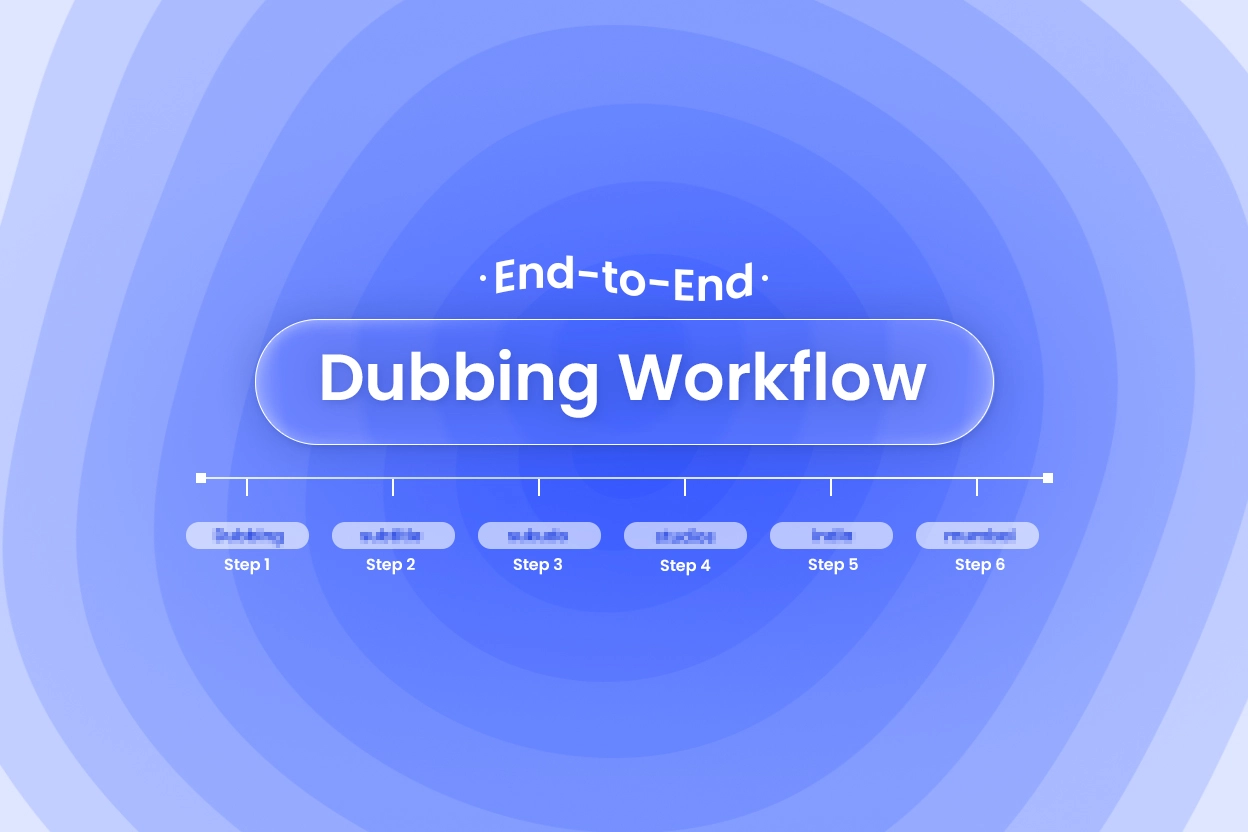
A professional dubbing workflow for OTT-ready delivery follows this order:
- Intake + specs (inputs, versions, deliverables, naming)
- Translation + adaptation (meaning + timing + native tone)
- Casting + direction plan (voice consistency and performance)
- Recording (controlled workflow + line tracking)
- Dialogue edit + sync pass (timing, pacing, cleanup)
- Mixing + mastering (clarity + loudness + spec compliance)
- QC + fixes (audio, sync, translation, delivery hygiene)
- Packaging + delivery (folders, naming, version logs)
When this pipeline is followed consistently, dubbing becomes scalable and predictable.
Inputs Needed Before You Start
You can’t run a clean dubbing pipeline if inputs are incomplete. At minimum you need:
Required Inputs (Minimum)
- Picture (final or versioned cut with change log)
- Original audio mix (reference)
- Script/transcript/dialogue list per episode
- Character list + relationships
- Target languages (priority order)
- Delivery specs (audio format, sample rate, channels, loudness targets)
- Style guide requirements (tone, slang rules, honorific rules, censorship rules if any)
Strongly Recommended Inputs (Reduce Rework)
- M&E track (music & effects without dialogue)
- Stems (D/M/E stems where available)
- Pronunciation glossary (names, brands, places)
- Subtitle files (if available)
- Spotting list / timecoded dialogue sheet (if available)
Why this matters: late changes are the #1 reason dubbing projects overshoot timelines. Version control and clean inputs are the difference between “production” and “chaos.”
Step 1: Project Setup + Version Control
This is where professional vendors differ from “freelancer-style” operations.
A) Lock the project “spec sheet”
Document and agree:
- File naming convention
- Folder structure
- Versioning rules (v1, v2, v3…)
- Turnaround expectations + feedback SLA
- Delivery formats (stereo/5.1, WAV/other formats)
- Subtitle formats if included (SRT/VTT/TTML)
B) Create a tracking system
For episodic projects, every episode needs:
- status (in translation/adaptation/recording/edit/mix/QC/delivered)
- issues log (what changed and why)
- approvals log (who approved which version)
C) Decide the “golden reference”
If Episode 1 is the reference for tone and casting, treat it as the “style anchor.” Your entire season consistency depends on this.
Step 2: Translation vs Adaptation (The Key Difference)
Translation (what it does)
- Transfers meaning from source to target language.
Adaptation (what it adds)
- Makes lines sound natural in the target culture.
- Adjusts sentence length to match timing and mouth movement.
- Preserves character tone and personality.
- Keeps dialogue punchy and performant (critical for micro-drama).
If you skip adaptation, you typically get:
- unnatural lines,
- pacing mismatch,
- and more retakes during recording (which increases cost and delays).
Adaptation checklist (quick)
- Meaning intact?
- Tone matches character?
- Sentence length fits timing?
- Slang/cultural cues localized?
- Names/terms consistent with glossary?
Avoided “literal translation” phrasing?
Step 3: Casting and Direction System
Casting is not just selecting voices—it’s creating continuity across episodes.
Casting deliverables
- Primary cast list per character (with backups)
- Voice reference clips
- Character direction notes (pace, emotion range, attitude)
- Pronunciation guide shared with the cast
- Rules on consistency (e.g., “character always speaks formally”)
Direction plan
In OTT dubbing, direction prevents expensive QC fixes later:
- Performance alignment (emotion, urgency, comedic timing)
- Naturalness (avoid “reading” voice)
- Timing discipline (avoid overlong phrases)
- Consistency across episodes
Production tip: if you’re scaling to multiple languages, create a “voice bible” for each language so the character’s personality remains stable across the season.
Step 4: Recording Workflow
A clean recording workflow minimizes retakes.
Standard recording flow
- Load episode + timecodes
- Record character lines per scene or per segment
- Real-time direction and approval
- Track takes and retakes (why retake happened)
- Export with naming conventions
- Log per-episode completion
Recording standards that reduce QC issues
- Consistent mic chain and room treatment
- Noise floor controlled
- Plosive and mouth-noise discipline
- Consistent distance from microphone
- Room tone captured for edits
Why line tracking matters
When you later get a client revision (“Line 142 needs a change”), line tracking saves hours.
Step 5: Dialogue Edit + Sync Pass (Where Most Quality is Won)
This stage is the “invisible work” that makes dubbing feel natural.
Dialogue edit includes
- Removing pops/clicks and cleaning breaths (without killing realism)
- Tightening timing
- Managing pauses so it feels like native speech
- Fixing syllable timing in close-ups
- Making scene-to-scene levels consistent
Sync pass includes
- Aligning dialogue to on-screen action
- Fixing early/late entries
- Ensuring pacing matches original scene rhythm
Common mistake: teams treat sync as “optional.” For OTT and micro-drama, sync is a core quality signal.
Step 6: Mixing + Mastering (OTT-Ready Delivery)
Mixing is not only “make it loud.” It is:
- making dialogue clear on mobile speakers,
- balancing against music/effects,
- and meeting platform specs.
Mix checklist (high-level)
- Dialogue clarity and intelligibility
- Balanced music/effects (not masking dialogue)
- No clipping or distortion
- Consistent episode loudness
- Correct channel layout (stereo/5.1 as required)
Mastering checklist (high-level)
- Loudness compliance (LUFS targets per spec)
- Export format compliance (sample rate, bit depth)
- Correct file naming and metadata
- Final sync check with picture
Step 7: QC Checklist (Audio + Language + Delivery)
QC is not one thing. For OTT dubbing, QC has three layers:
A) Language QC (translation + adaptation)
- Meaning accuracy
- Tone consistency
- Terminology consistency (glossary)
- No awkward literal phrasing
- Cultural appropriateness
B) Technical QC (audio and sync)
- Sync and pacing
- Clipping, distortion, noise
- Loudness consistency
- Missing lines or truncated words
- Abrupt edits or unnatural cuts
C) Delivery QC (packaging and hygiene)
- Correct file format
- Correct naming convention
- Correct folder structure
- Correct version labeling
- All required assets included
Best practice: QC should produce a written report (issues found + resolution status). This reduces repeat errors across episodes.
Step 8: Delivery Packaging and Handover
This is where many projects fail despite good audio.
Delivery packaging should include
- Episode folders (EP01, EP02…)
- Final mixes with clear naming
- Version log (what changed from v1 to v2)
- QC report summary
- Optional: dialogue-only track, M&E updates, stems (if part of scope)
Naming convention matters
OTT teams often have automated ingestion. Wrong naming can mean:
- files rejected,
- delays,
- wrong audio going live.
Agree naming rules at the start and enforce them.
Common Failure Points (And How to Avoid Them)
Failure 1: Late picture/script changes without version control
Fix: lock inputs; if changes occur, require change logs and re-approve scope.
Failure 2: Translation without adaptation
Fix: explicitly include adaptation stage with timing and naturalness checks.
Failure 3: No centralized glossary/style guide
Fix: maintain one shared glossary per language and update it weekly.
Failure 4: QC only at the end
Fix: do QC in batches (10–20 episodes) so issues don’t repeat across the season.
Failure 5: Weak delivery hygiene
Fix: packaging checklist + automated foldering + naming validation.
If you’re building a multi-language dubbing pipeline, the fastest way to prevent rework is to standardize inputs + deliverables + QC.
Share:
- one sample episode
- target languages (priority order)
- delivery specs (audio/subtitle formats)
We can propose a production-ready dubbing workflow and pilot plan. Contact Sukudo Studios Today!
FAQ: Dubbing Process and Workflow
Dubbing requires not only translation but also adaptation, casting, recording, editing, mixing, and QC. Translation is only one stage.
Adaptation makes lines sound natural and fit timing. Without it, dialogue often feels unnatural and causes retakes during recording.
Final dubbed audio per episode (stereo/5.1 as required), a QC report, version logs, and clean packaging. Optional deliverables include dialogue-only tracks, stems, and subtitle assets.
M&E is strongly recommended. It allows clean replacement of dialogue while keeping music and effects intact.
Lock casting early, use a character voice bible, centralize direction notes, and run continuity checks during QC.
Late changes to picture/scripts, unclear specs, missing deliverables (like M&E), and slow approvals.
Use three layers: language QC (meaning/tone), technical QC (sync/audio), and delivery QC (format/naming/packaging).
Use standardized workflows, locked glossaries/style guides, pilot episodes for each language, and batch production with periodic QC gates.
A sample episode, transcript/dialogue list, target languages, delivery specs, and M&E/stems if available.
Lock versions early, run pilot episodes, do QC in batches, and maintain clear change logs.